
After more than two years of living on the go as a digital nomad, I’m ready to share what this unique lifestyle has really been like.
In many ways, being a nomad is the epitome of lifestyle design — I’ve been able to trot around the globe while working remotely, discovering new places and adventures along the way. So far, my journey has taken me through Colombia, Spain, Poland, and México, with Bolivia up next and likely Brazil after that.
Without a doubt, I’ll always look back on my nomad years as one of the highlights of my life. But because I’m still living it, I’m also facing the reality that there are some significant downsides that might make it unsustainable in the long run.
As I always say, too much of a good thing — even travel — can end up being a bad thing. This post is my take on the real pros and cons of being a digital nomad, so you can decide for yourself whether this lifestyle is worth pursuing.
Pro #1: You’ll Meet People From Everywhere
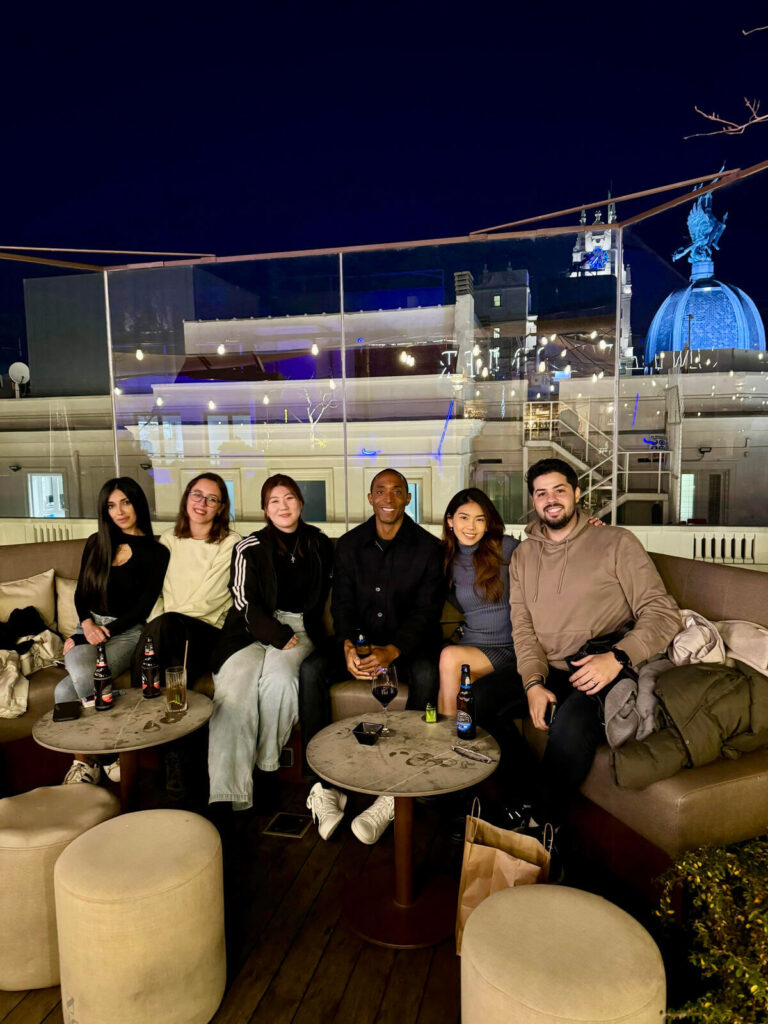
The people you meet as a digital nomad are one of the greatest rewards of the lifestyle. In places like Europe, where countries are tightly packed and constantly welcoming travelers, you’re exposed to a mix of cultures and perspectives that’s hard to match.
I’ve met people from Germany, Lebanon, Seychelles, Turkey, South Korea, Ukraine — and, of course, Italy, Poland, Colombia, and Spain. Each connection brings new stories, lessons, and perspectives you can carry with you for life.
Meeting so many interesting people inevitably shapes you. You become more adaptable, more worldly, and more capable of walking into any room — anywhere — with the quiet confidence that you belong there.
Pro #2: Nomadism Equals Adventure & Freedom
You’d be hard pressed to find a lifestyle more adventurous than being a digital nomad. All you really need is the right kind of job, a laptop, and a backpack — and off you go on a string of adventures that give you a level of freedom few traditional lifestyles can match.
One of the best parts about living on the go is being unbound by geography. The world today is so connected that you can get almost anywhere via plane, train, boat, or car.
Whether you’ve dreamed of trekking deep into the Amazon, relaxing on Bali’s beaches, or exploring the winding alleys of Venice, digital nomadism makes it entirely possible — with very few limitations.
Pro #3: How the Nomad Lifestyle Pushes You to Grow & Adapt
I remember my first days in Colombia like it was yesterday. In August 2023, on a whim, I decided to move there — and a week later, I was hopping out of an Uber on Medellín’s famed La 70 (pronounced “La Setenta”) into a massive crowd that gave me one of the biggest frights of my life.
I kept my wits about me as I navigated the crush of people speaking and moving in ways I wasn’t used to. Over time, it all became normal — the language, the rhythm of the city, the entire vibe of an energetic Latin American hub.
Fast forward to last week, when I landed in Mexico City on a rainy night. I dropped my bags and went straight out into the streets in search of food, weaving among millions without a shred of the nerves I once had.
That’s one of the most valuable things about this lifestyle: it challenges you to adapt, face fears, and grow in ways you can’t fully imagine until you’ve done it. Not everyone wants that level of personal growth — but for those who do, the nomad lifestyle feeds the spirit.
Con #1: A Constant State of Grief
A woman I recently met in Mexico city described one of the biggest downsides of living on the go as a “constant state of grief” — and I couldn’t agree more. Digital nomads constantly cycle through connections and environments, saying goodbye to people and places that once felt like home.
In just two years, I’ve packed my bags and said my goodbyes three times, with a fourth coming soon in Mexico City. Leaving behind friends, relationships, apartments, gyms, cafés — all the little pieces that make a place yours — hasn’t gotten easier. I’ve just adapted by becoming more detached, less emotionally invested, knowing my next departure is always close.
Psychology backs this up. Prolonged Grief Disorder (PGD) — typically associated with losing loved ones — shows that unresolved grief can lead to persistent emotional pain, numbness, loneliness, and even identity disturbances.
In short, traveling the world may sound like a dream, but it’s not without its emotional toll.
Con #2: Loneliness Runs Deep
Loneliness is one of the most talked-about struggles in the nomad lifestyle. In my case, I’ve been in Mexico City for nine days and haven’t formed a single meaningful bond. I probably won’t, knowing I’ll be gone in just a few weeks.
As one Redditor in r/digitalnomad put it:
Does anybody else feel extreme isolation as a digital nomad? I have no plans of stopping and absolutely love seeing new places and learning about new cultures, but am having a hard time with the isolation aspect. I do make an effort to make friends in new places, but find that it takes a while to get beyond the small talk phase with people.
And in response another user writes:
.... it's kinda inherent in the lifestyle. Relationships taking time to develop is just human nature. You might find some success stories of roving bands of nomad besties, but generally speaking I think you're swimming against the current by trying to live this way and maintain close relationships. At minimum you need to be going back to the same places to build relationships rather than roaming around randomly.
If you’re considering this lifestyle, ask yourself if you can handle long stretches of solitude — because in a life on the go, it’s not the exception, it’s the norm.
Con #3: Why Nomad Lifestyle Burnout Is Real
It’s no secret that I think travelling sucks. The packing, the airport shuffle, being crammed into planes, adjusting to time zones — none of these make my list of favorite activities. In fact, I find them exhausting.
But those are just the obvious factors. Burnout in the nomad lifestyle often comes from the constant adaptation it demands — new languages, new logistics, new routines every few months. You’re never truly settled.
That’s why I lean toward “slomading” — staying in one place as long as possible to at least create some stability in the chaos.
Verdict: Never Commit to the Place, and the Place Never Commits to You
As with everything in life, there are no perfect setups — only trade-offs.
I said at the start that living on the go as a digital nomad has been one of the most rewarding experiences of my life. It’s pushed me to grow, adapt, and experience life in ways few people will. But it’s also made me aware of its emotional costs — ones that mean I won’t be doing it forever.
I wouldn’t trade these last two years for anything. But I now have the clarity to know my time in this lifestyle is coming to an end. My plan is to make the most of my remaining 6–9 months as a nomad while also laying the foundation for a more stable, rooted life — one where my feet stay firmly in one place.